 To All Posts
Patent Family Size, Continuations, and Why Asserted Patents Look Different


When patents are challenged in litigation, it isn’t the portfolio that’s tested, it’s the individual patent. Yet asserted patents rarely stand alone.
Looking across 6,500+ US patent litigations from the past five years, one question keeps surfacing:
What do the families behind asserted patents actually look like and how are they different?
Are asserted patents built differently from the start?
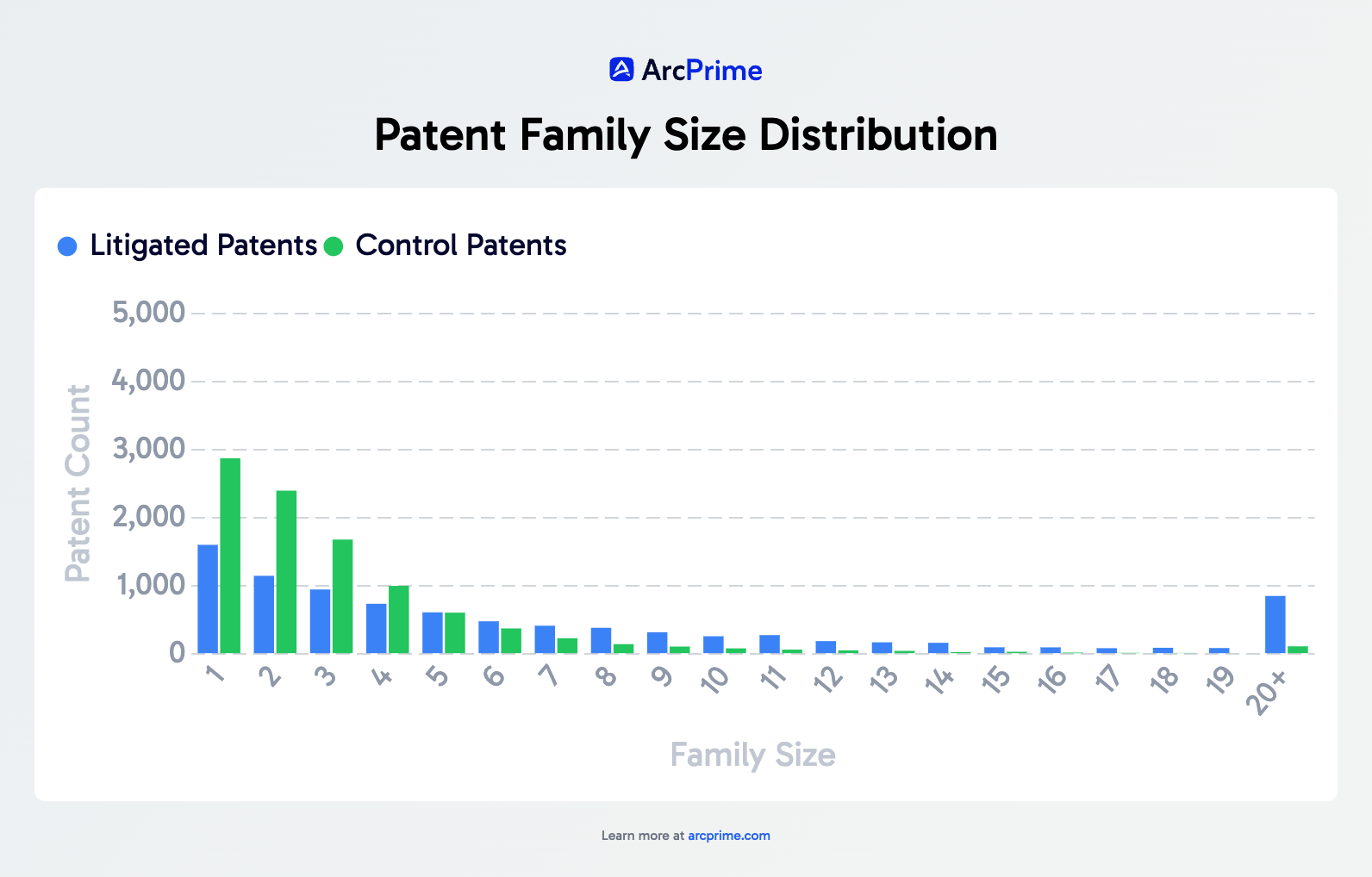
Early analysis suggests that patents which go on to be asserted are not typically “one-and-done” filings. Instead, they tend to sit within families that have been shaped over time, often quietly, through prosecution decisions made years before any dispute arises.
But how much does family depth really matter?
And does this pattern hold across industries?
Why do life sciences stand apart?
Some sectors appear to follow the family-depth trend more strongly than others. In particular, pharma and biotech behave very differently from the rest of the market.
Is this simply a reflection of regulatory complexity or a deliberate strategy to build cumulative leverage through layered protection?
What role do continuations really play?
Continuation behaviour turns out to be a critical part of the story.
Asserted patents are far more likely to be part of families that remain “alive” and adaptable over time, raising an important question for portfolio owners:
Are continuation decisions being made strategically or by default?
Designing portfolios from the patent up
Family design choices often feel tactical in isolation:
- Whether to keep an application alive
- Whether to file a continuation or divisional
- Whether a family is worth extending further
But over time these decisions compound, shaping enforcement readiness long before litigation is on the horizon.
📄 The full report explores the data in detail, including:
- Industry-by-industry comparisons
- The scale of family size differences
- How continuations differ between OpCos and NPEs
- Why extremely large families are rare but disproportionately asserted
Download the full report to see what the data reveal
Subscribe to our newsletter
Get the latest insights on IP strategy and patent portfolio management, straight to your inbox.
Power Every Patent Decision
With One Platform
See how ArcPrime connects your portfolio, workflows, and business context to help your team make better decisions across the patent lifecycle.
