 To All Posts
Politics in Patent Strategy

Building a patent portfolio is more political than people think. The obvious answer, "patent what's valuable", is not so straightforward.
Different stakeholders want different things. Some executives think more patents equal more value. Others (at the same company) want a lean, surgical approach. Engineers want their names on patents, proof they invented something novel. And meanwhile, some of the most brilliant innovations simply aren’t detectable.
Detectability, the ability to observe, as an outsider, whether a competitor is actually using your patented invention, is a practical factor to consider when patenting something. You can patent groundbreaking IP, but if you can’t later detect someone is using it, the business value is limited.
Yet detectability isn’t fixed. What was once invisible can become visible with new technology. Competitors sometimes reveal internal workings by accident (blog posts!). Future regulations, especially in areas like AI, may mandate transparency. And in litigation, a hard-to-detect patent can become usable when paired with a highly detectable one.
Patent lawyers sit squarely in the middle of all these competing (but reasonable) interests. They may know what makes strategic sense, but pushing back carries political cost. It’s often easier to file what the business wants than to challenge executives with limited time and strong opinions. Relationships have friction, and you choose your battles.
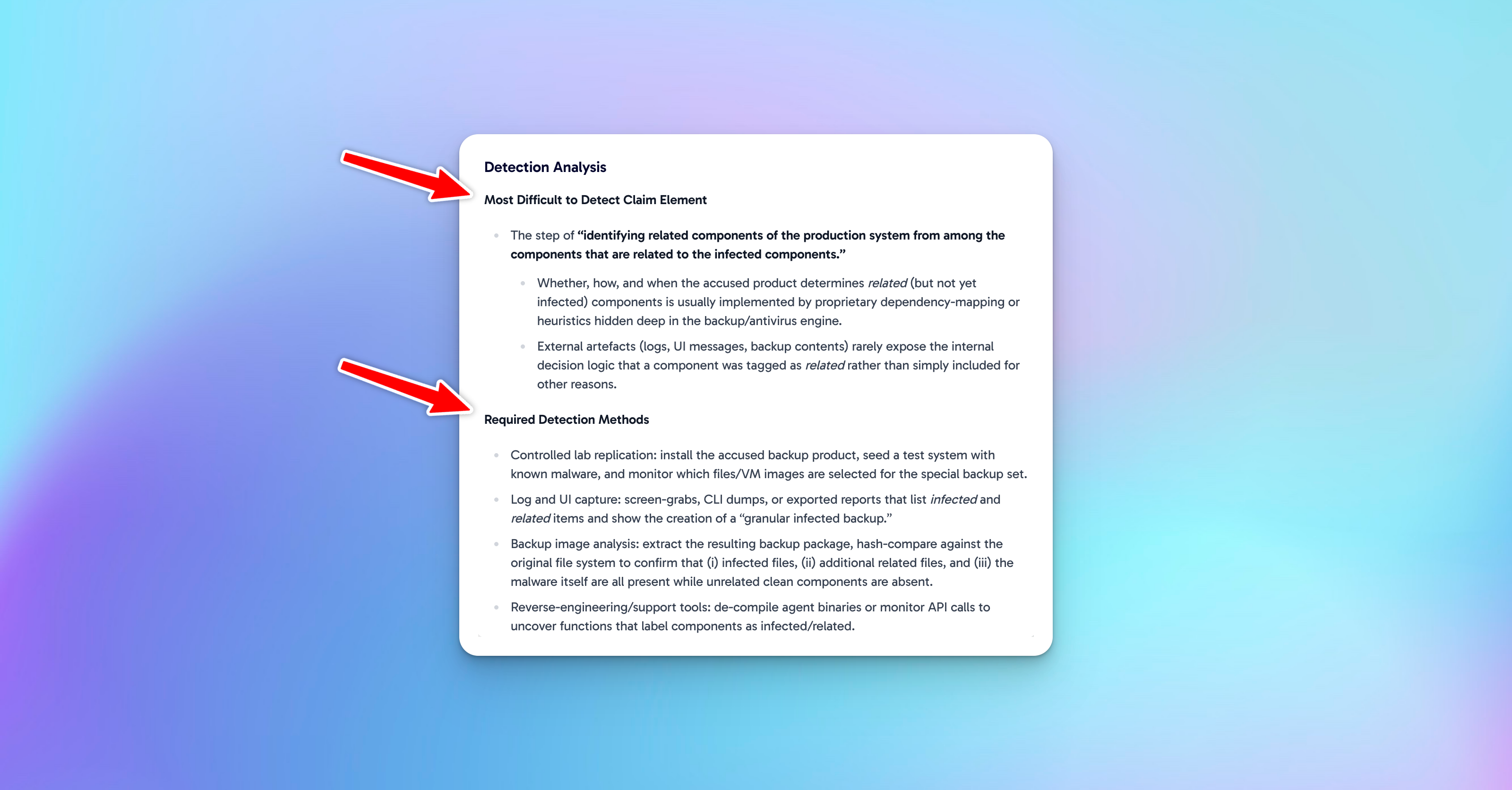
One way to make pushback easier and less political is to ground discussions in something objective. That’s why we built a detectability tool: it gives patent teams a structured method for classifying each idea as high, medium, or low detectability and pinpoints the elements that would be hardest to prove in practice. Lawyers can walk into conversations anchored in concrete risk, supported by a shared technical framework. It shifts debates from gut feel of “we should protect everything valuable” to evidence, and it equips patent counsel with a clearer, more defensible narrative to bring back to the business.
I don’t deal with politics much these days (perks of being a founder), but I’ve grown patent portfolios at startups and big companies. Great portfolio strategy matters, but it still depends on one precondition: legal leadership must be empowered. When general counsels and heads of IP have the skill and the backbone to push back on CEOs/VPs and guide decisions toward what actually serves the business, the sensible path usually wins.
Subscribe to our newsletter
Get the latest insights on IP strategy and patent portfolio management, straight to your inbox.
Power Every Patent Decision
With One Platform
See how ArcPrime connects your portfolio, workflows, and business context to help your team make better decisions across the patent lifecycle.
